

WILHELMINA BARNS-GRAHAM CBE
Wilhelmina Barns-Graham CBE (1912-2004) was a pioneer of post-war British abstraction, known for her boldly colourful and painterly imagery.
At the forefront of Britain’s abstract art movement, Barns-Graham is associated with the School of St. Ives artists since taking refuge there in 1940 after studying in Edinburgh, forging relationships with Ben Nicholson, Barbara Hepworth and Naum Gabo. Later, whilst in her eighties, Barns-Graham produced an astonishing number of brilliant paintings and prints between her Cornish studio and hometown of St. Andrews.
Although Barns-Graham had made the occasional etching and linocut, it was screenprints made at Curwen Studio in 1991 that can be seen as the true start of her life as a printmaker. Her introduction to Carol Robertson and Robert Adam of Graal Press in 1998 provided her with a more expansive range of possibilities due to Robertson’s groundbreaking development of water-based screenprinting inks. With Barns-Graham’s individual brush marks captured on acetate, they made prints that are truly an embodiment of the artist’s expressive, painterly style. Her ‘Time’ series was so successful that she went on to collaborate with Graal on the creation of significant series of images - Millennium, Sunghrie, and Earth - concluding with the White Circle, Wind Dance and Water Dance (Porthmeor) series of 2002/3.
For Barns-Graham, printmaking was a liberating experience, one in which she could play with screens to create complete series of images. Bold new ideas sprang constantly from these variations. She worked so prolifically, outpacing the printers with whom she collaborated, that several editions were unsigned or unprinted at the time of her death in 2004. These latter prints, all strictly mapped by the artist, were editioned posthumously to ensure a complete catalogue of the stunning work that Barns-Graham created.
Wilhelmina Barns-Graham was one of Britain’s most significant 20th century modern artists. Scottish born and a prominent member of the St Ives group, she was a sublime draftsman, painter, printmaker and a brilliant colourist. Dividing her time between studios in St Ives and St Andrews she followed a consistent artistic vision throughout her sixty-five-year career. Her work is held in all major UK public collections.
AVAILABLE WORKS

Wilhelmina Barns-Graham CBE
Sunghrie III, 2002
Screenprint, edition of 75
58 x 76cm (image)
Framed item is now sold
Further copies are available to order and can be similarly framed.
Signed by the artist
Please note the framed work has sold, we have an additional work available unframed. Our gallery offers a bespoke framing service, please contact us if you would like to discuss framing options.
Wilhelmina Barns-Graham was a pioneer of post-war British abstraction. Born in St Andrew’s, she studied at the Edinburgh College of Art before taking refuge at St Ives, Cornwall in 1940. There she met Ben Nicholson, Barbara Hepworth and Naum Gabo, and her work became permanently associated with the School of St Ives where she maintained a studio until her death.
In her last decade, while in her eighties, Barns-Graham produced an astonishing number of prints. For her, making prints was a liberating experience, one in which she could play with screens to create complete series of images. New ideas sprang constantly from these variations. She came to move so swiftly, outpacing the printers with whom she collaborated, that several 2003 editions were unsigned at the time of her death in 2004 while other images remained unprinted. These latter prints, all strictly mapped by the artist, came to be editioned posthumously to enable the completion of the publication ‘The Prints of Wilhelmina Barns-Graham : A Complete Catalogue’ (Lund Humphries, 2007) by Dr Ann Gunn.
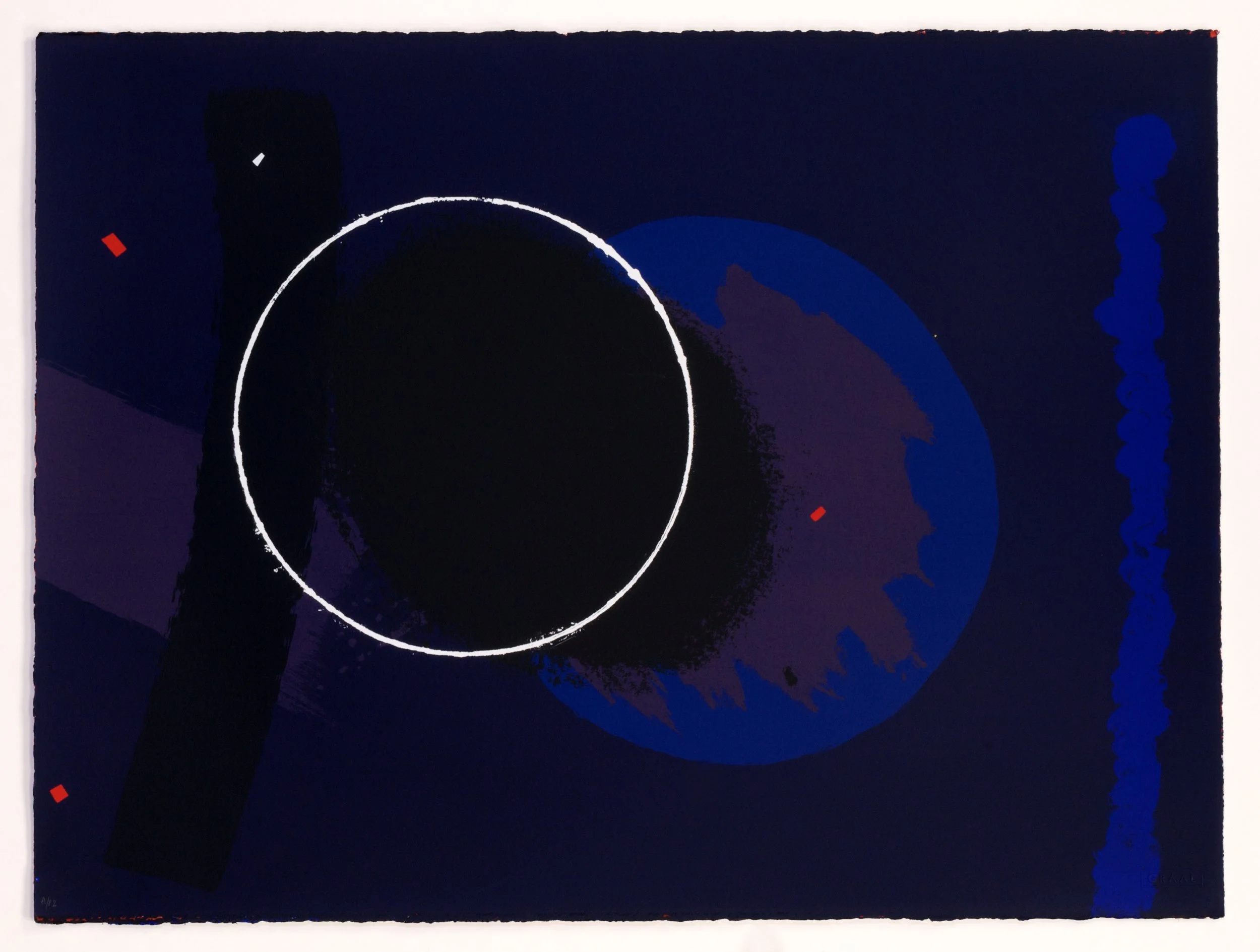
Wilhelmina Barns-Graham CBE
White Circle Series III, 2006
Screenprint, edition of 75
58 x 76cm (image)
Framed copy is now sold
Further copies are available and can be framed to order
Posthumous
Please note the framed work has sold, we have an additional work available unframed. Our gallery offers a bespoke framing service, please contact us if you would like to discuss framing options.
Wilhelmina Barns-Graham was a pioneer of post-war British abstraction. Born in St Andrew’s, she studied at the Edinburgh College of Art before taking refuge at St Ives, Cornwall in 1940. There she met Ben Nicholson, Barbara Hepworth and Naum Gabo, and her work became permanently associated with the School of St Ives where she maintained a studio until her death.
In her last decade, while in her eighties, Barns-Graham produced an astonishing number of prints. For her, making prints was a liberating experience, one in which she could play with screens to create complete series of images. New ideas sprang constantly from these variations. She came to move so swiftly, outpacing the printers with whom she collaborated, that several 2003 editions were unsigned at the time of her death in 2004 while other images remained unprinted. These latter prints, all strictly mapped by the artist, came to be editioned posthumously to enable the completion of the publication ‘The Prints of Wilhelmina Barns-Graham : A Complete Catalogue’ (Lund Humphries, 2007) by Dr Ann Gunn.

Wilhelmina Barns-Graham CBE
Water Dance (Porthmeor) No.VI, 2006
Screenprint
56 x 76cm (image)
Framed item is now sold
Further copies are available and can be framed to order
Posthumous
Please note the framed work has sold, we have an additional work available unframed. Our gallery offers a bespoke framing service, please contact us if you would like to discuss framing options.
Wilhelmina Barns-Graham was a pioneer of post-war British abstraction. Born in St Andrew’s, she studied at the Edinburgh College of Art before taking refuge at St Ives, Cornwall in 1940. There she met Ben Nicholson, Barbara Hepworth and Naum Gabo, and her work became permanently associated with the School of St Ives where she maintained a studio until her death.
In her last decade, while in her eighties, Barns-Graham produced an astonishing number of prints. For her, making prints was a liberating experience, one in which she could play with screens to create complete series of images. New ideas sprang constantly from these variations. She came to move so swiftly, outpacing the printers with whom she collaborated, that several 2003 editions were unsigned at the time of her death in 2004 while other images remained unprinted. These latter prints, all strictly mapped by the artist, came to be editioned posthumously to enable the completion of the publication ‘The Prints of Wilhelmina Barns-Graham : A Complete Catalogue’ (Lund Humphries, 2007) by Dr Ann Gunn.
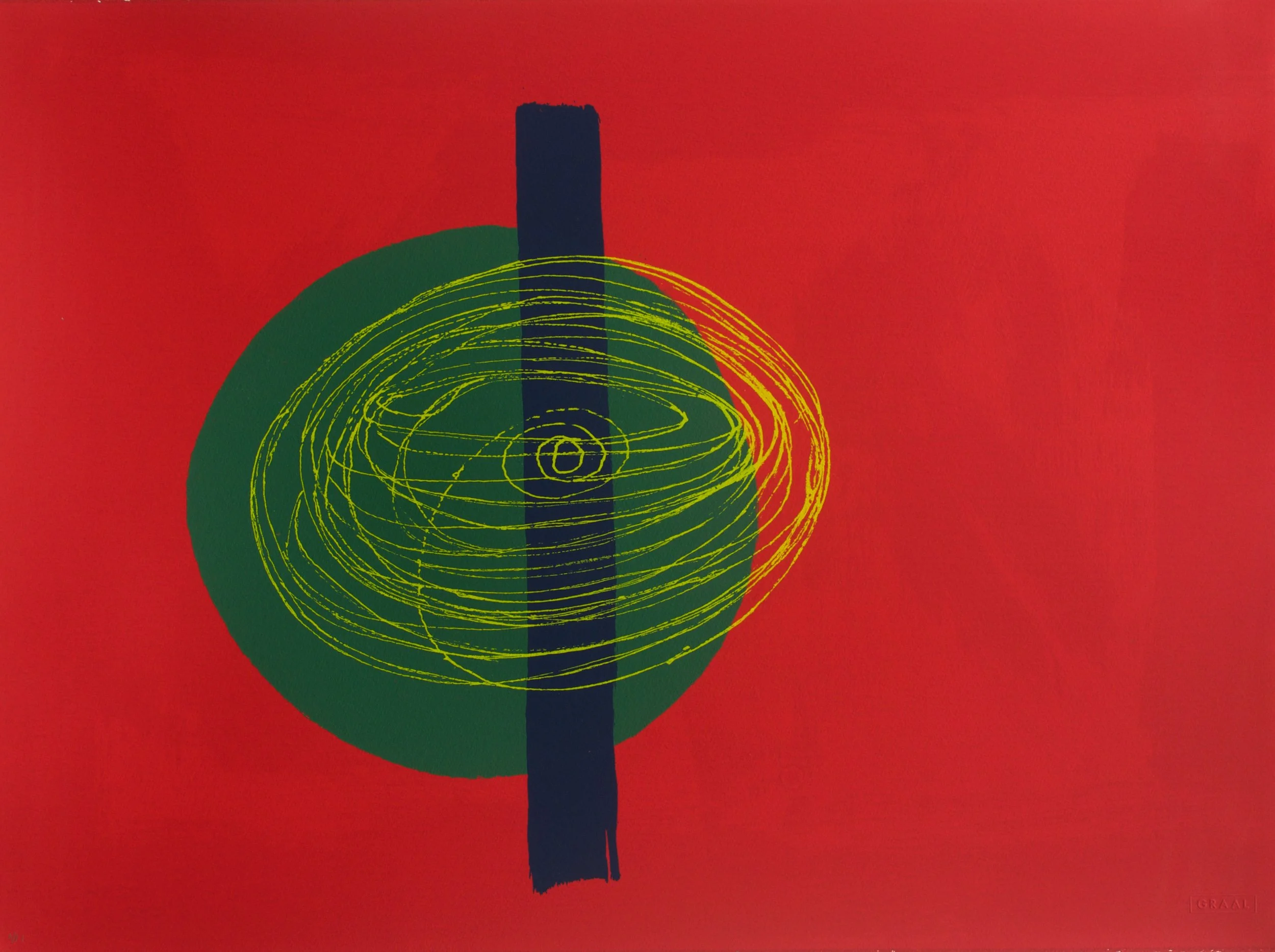
Wilhelmina Barns-Graham CBE
Runabout Time III, 2006
Screenprint, edition 9/25
56 x 76cm (image)
Framed
Posthumous
The print has been mounted and framed in a bespoke, white-finished frame.
Wilhelmina Barns-Graham was a pioneer of post-war British abstraction. Born in St Andrew’s, she studied at the Edinburgh College of Art before taking refuge at St Ives, Cornwall in 1940. There she met Ben Nicholson, Barbara Hepworth and Naum Gabo, and her work became permanently associated with the School of St Ives where she maintained a studio until her death.
In her last decade, while in her eighties, Barns-Graham produced an astonishing number of prints. For her, making prints was a liberating experience, one in which she could play with screens to create complete series of images. New ideas sprang constantly from these variations. She came to move so swiftly, outpacing the printers with whom she collaborated, that several 2003 editions were unsigned at the time of her death in 2004 while other images remained unprinted. These latter prints, all strictly mapped by the artist, came to be editioned posthumously to enable the completion of the publication ‘The Prints of Wilhelmina Barns-Graham : A Complete Catalogue’ (Lund Humphries, 2007) by Dr Ann Gunn.
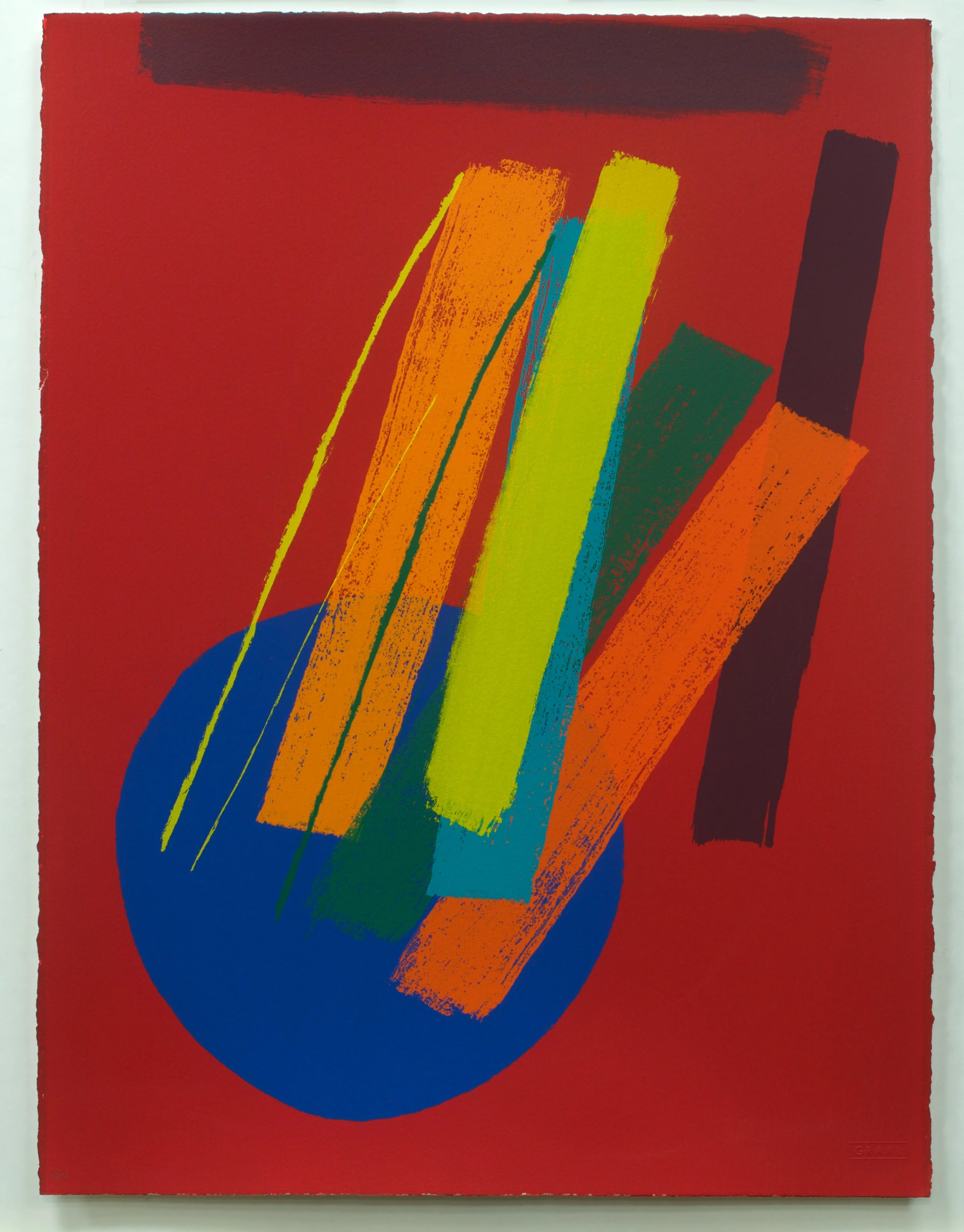
Wilhelmina Barns-Graham CBE
Quick Time, 2006
Screenprint, edition 3/25
58 x 76cm (image)
Framed
Posthumous
The print has been mounted and framed in a bespoke, white-finished frame.
Wilhelmina Barns-Graham was a pioneer of post-war British abstraction. Born in St Andrew’s, she studied at the Edinburgh College of Art before taking refuge at St Ives, Cornwall in 1940. There she met Ben Nicholson, Barbara Hepworth and Naum Gabo, and her work became permanently associated with the School of St Ives where she maintained a studio until her death.
In her last decade, while in her eighties, Barns-Graham produced an astonishing number of prints. For her, making prints was a liberating experience, one in which she could play with screens to create complete series of images. New ideas sprang constantly from these variations. She came to move so swiftly, outpacing the printers with whom she collaborated, that several 2003 editions were unsigned at the time of her death in 2004 while other images remained unprinted. These latter prints, all strictly mapped by the artist, came to be editioned posthumously to enable the completion of the publication ‘The Prints of Wilhelmina Barns-Graham : A Complete Catalogue’ (Lund Humphries, 2007) by Dr Ann Gunn.
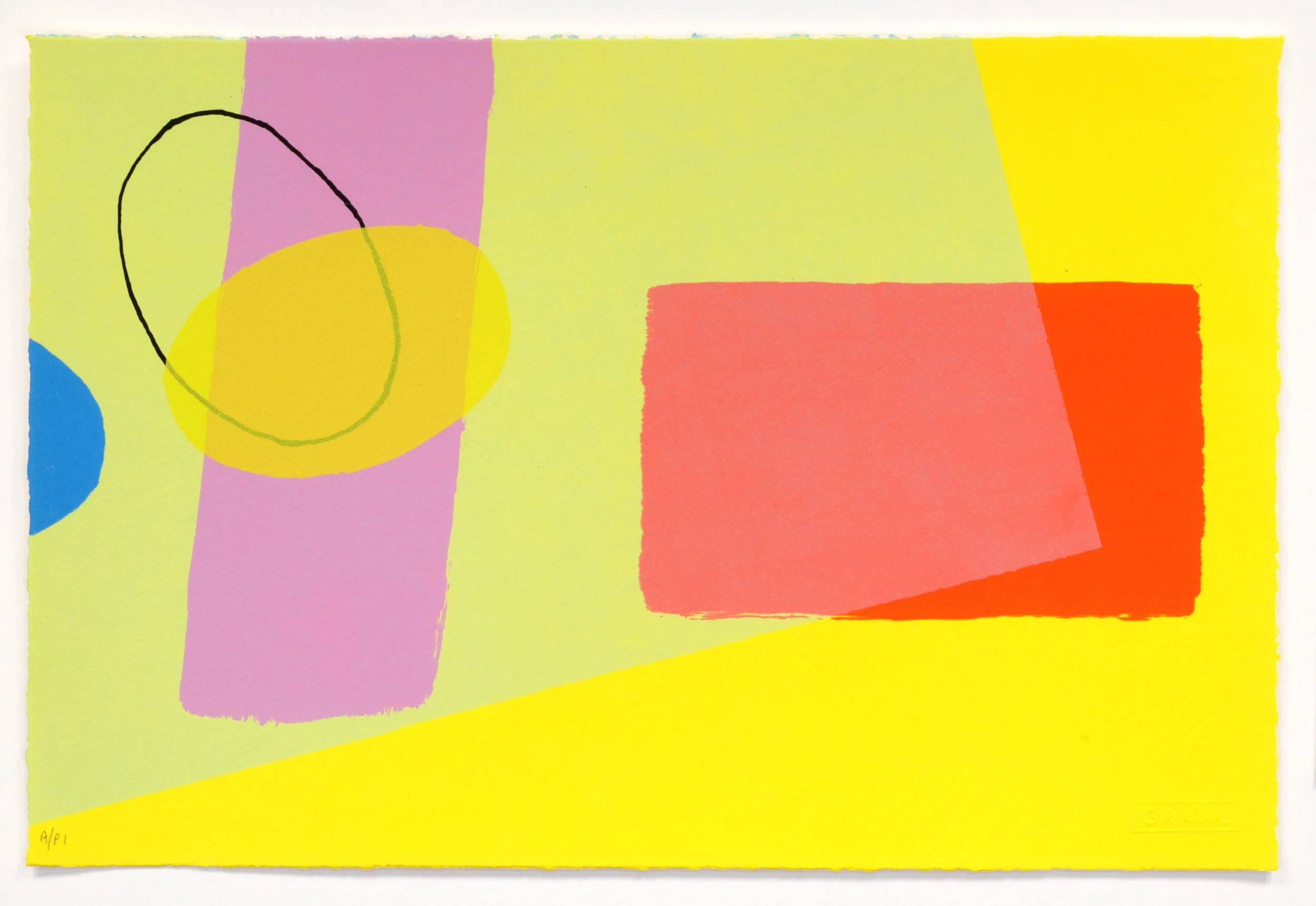
Wilhelmina Barns-Graham CBE
Cobalt Playing Games, 2006
Screenprint, edition 3/25
29.5 x 43cm (image)
Framed
The print has been mounted and framed in a bespoke, white-finished frame.
Wilhelmina Barns-Graham was a pioneer of post-war British abstraction. Born in St Andrew’s, she studied at the Edinburgh College of Art before taking refuge at St Ives, Cornwall in 1940. There she met Ben Nicholson, Barbara Hepworth and Naum Gabo, and her work became permanently associated with the School of St Ives where she maintained a studio until her death.
In her last decade, while in her eighties, Barns-Graham produced an astonishing number of prints. For her, making prints was a liberating experience, one in which she could play with screens to create complete series of images. New ideas sprang constantly from these variations. She came to move so swiftly, outpacing the printers with whom she collaborated, that several 2003 editions were unsigned at the time of her death in 2004 while other images remained unprinted. These latter prints, all strictly mapped by the artist, came to be editioned posthumously to enable the completion of the publication ‘The Prints of Wilhelmina Barns-Graham : A Complete Catalogue’ (Lund Humphries, 2007) by Dr Ann Gunn.

Wilhelmina Barns-Graham CBE
Millenium Series: Blue II, 2000
Screen print
24 x 30 cm (image)
Framed item is now sold
further copies can be sourced and framed to order
The print has been signed, numbered and dated by the artist.
Please note the framed work has sold, we have an additional work available unframed. Our gallery offers a bespoke framing service, please contact us if you would like to discuss framing options.
Wilhelmina Barns-Graham was a pioneer of post-war British abstraction. Born in St Andrew’s, she studied at the Edinburgh College of Art before taking refuge at St Ives, Cornwall in 1940. There she met Ben Nicholson, Barbara Hepworth and Naum Gabo, and her work became permanently associated with the School of St Ives where she maintained a studio until her death.
In her last decade, while in her eighties, Barns-Graham produced an astonishing number of prints. For her, making prints was a liberating experience, one in which she could play with screens to create complete series of images. New ideas sprang constantly from these variations. She came to move so swiftly, outpacing the printers with whom she collaborated, that several 2003 editions were unsigned at the time of her death in 2004 while other images remained unprinted. These latter prints, all strictly mapped by the artist, came to be editioned posthumously to enable the completion of the publication ‘The Prints of Wilhelmina Barns-Graham : A Complete Catalogue’ (Lund Humphries, 2007) by Dr Ann Gunn.

Wilhelmina Barns-Graham CBE
Cobalt and Orange Playing Games, 2007
Screenprint, edition 16/25
29.5 x 40cm (image)
Framed
The print has been mounted and framed in a bespoke, white-finished frame.
Wilhelmina Barns-Graham was a pioneer of post-war British abstraction. Born in St Andrew’s, she studied at the Edinburgh College of Art before taking refuge at St Ives, Cornwall in 1940. There she met Ben Nicholson, Barbara Hepworth and Naum Gabo, and her work became permanently associated with the School of St Ives where she maintained a studio until her death.
In her last decade, while in her eighties, Barns-Graham produced an astonishing number of prints. For her, making prints was a liberating experience, one in which she could play with screens to create complete series of images. New ideas sprang constantly from these variations. She came to move so swiftly, outpacing the printers with whom she collaborated, that several 2003 editions were unsigned at the time of her death in 2004 while other images remained unprinted. These latter prints, all strictly mapped by the artist, came to be editioned posthumously to enable the completion of the publication ‘The Prints of Wilhelmina Barns-Graham : A Complete Catalogue’ (Lund Humphries, 2007) by Dr Ann Gunn.

Wilhelmina Barns-Graham CBE
Orange and Lemon Playing Games II, 1999
Screenprint, edition 52/75
28 x 40cm (image)
Framed
Signed by the artist
The print has been mounted and framed in a bespoke, white-finished frame.
Wilhelmina Barns-Graham was a pioneer of post-war British abstraction. Born in St Andrew’s, she studied at the Edinburgh College of Art before taking refuge at St Ives, Cornwall in 1940. There she met Ben Nicholson, Barbara Hepworth and Naum Gabo, and her work became permanently associated with the School of St Ives where she maintained a studio until her death.
In her last decade, while in her eighties, Barns-Graham produced an astonishing number of prints. For her, making prints was a liberating experience, one in which she could play with screens to create complete series of images. New ideas sprang constantly from these variations. She came to move so swiftly, outpacing the printers with whom she collaborated, that several 2003 editions were unsigned at the time of her death in 2004 while other images remained unprinted. These latter prints, all strictly mapped by the artist, came to be editioned posthumously to enable the completion of the publication ‘The Prints of Wilhelmina Barns-Graham : A Complete Catalogue’ (Lund Humphries, 2007) by Dr Ann Gunn.

Wilhelmina Barns-Graham CBE
Wind Dance, 1996
Acrylic on paper
39 x 28.2cm (image)
Framed
Wilhelmina Barns-Graham was a pioneer of post-war British abstraction. Born in St Andrew’s, she studied at the Edinburgh College of Art before taking refuge at St Ives, Cornwall in 1940. There she met Ben Nicholson, Barbara Hepworth and Naum Gabo, and her work became permanently associated with the School of St Ives where she maintained a studio until her death.
In her last decade, while in her eighties, Barns-Graham produced an astonishing number of prints. For her, making prints was a liberating experience, one in which she could play with screens to create complete series of images. New ideas sprang constantly from these variations. She came to move so swiftly, outpacing the printers with whom she collaborated, that several 2003 editions were unsigned at the time of her death in 2004 while other images remained unprinted. These latter prints, all strictly mapped by the artist, came to be editioned posthumously to enable the completion of the publication ‘The Prints of Wilhelmina Barns-Graham : A Complete Catalogue’ (Lund Humphries, 2007) by Dr Ann Gunn.
Wilhelmina Barns-Graham CBE
Wind Dance Series No.V, 2006
Screenprint, edition 23/70
56 x 56cm (image)
Framed
Posthumous
The print has been mounted and framed in a bespoke, white-finished frame.
Wilhelmina Barns-Graham was a pioneer of post-war British abstraction. Born in St Andrew’s, she studied at the Edinburgh College of Art before taking refuge at St Ives, Cornwall in 1940. There she met Ben Nicholson, Barbara Hepworth and Naum Gabo, and her work became permanently associated with the School of St Ives where she maintained a studio until her death.
In her last decade, while in her eighties, Barns-Graham produced an astonishing number of prints. For her, making prints was a liberating experience, one in which she could play with screens to create complete series of images. New ideas sprang constantly from these variations. She came to move so swiftly, outpacing the printers with whom she collaborated, that several 2003 editions were unsigned at the time of her death in 2004 while other images remained unprinted. These latter prints, all strictly mapped by the artist, came to be editioned posthumously to enable the completion of the publication ‘The Prints of Wilhelmina Barns-Graham : A Complete Catalogue’ (Lund Humphries, 2007) by Dr Ann Gunn.
Information for buyers